
Innovation doesn't happen just because someone puts the word in an event title. It starts to take shape when people are exposed to new possibilities, get hands-on with technology, meet people who are already building businesses, and realize they can turn an idea into something tangible. That was the thinking behind UALL FEICAMP Innovation, held on November 18 and 19, 2026, in Bagé.
Over two days, the event brought together entrepreneurship, education, technology, and hands-on experiences. The program featured the Entrepreneur Fair and Junior Fair, activities for high school and college students, project showcases, panel discussions, stories from entrepreneurs, Innovation Cinema, and immersive virtual and augmented reality experiences.
But the event didn't come together in November. It took months of preparation, project development, coordination, and hard work to turn an initial proposal into a program open to the community. I was involved from the very beginning, working with URCAMP's Office of the Vice Provost for Innovation, Graduate Studies, Research, and Extension (PROIPPEX) alongside Vice Provost Dr. Paula Silveira and Professor Dr. Rosete Kohn. My contributions included developing the proposal, planning and organizing the program, creating the visual identity, and preparing the technology experiences that would be presented to attendees.
From an initial proposal to two full days of programming
UALL FEICAMP Innovation began with a proposal submitted to FAPERGS Call for Proposals 08/2025: Support for Event Organization (AOE), an initiative by the Research Support Foundation of the State of Rio Grande do Sul (FAPERGS) to fund events related to science, technology, and innovation. That support was essential in making the event's structure and planned activities possible.
The goal was to create an experience that went beyond lectures. We wanted to introduce high school and college students to entrepreneurship, make technology accessible, and create opportunities for universities, businesses, government, and the wider community to connect.
There was also a regional goal. The Fronteira Oeste and Campanha regions are home to students, professionals, researchers, and entrepreneurs capable of developing meaningful solutions. But those possibilities need to be seen, experienced, and discussed. An event can provide a meeting place for all of that: bringing different people together and creating opportunities for conversations about innovation to turn into collaboration.
FEICAMP returns with a broader vision
One of the event's central features was FEICAMP, the Entrepreneur Fair, which returned after a period without editions. The goal was to bring the fair back and connect it with UALL's work, adding a stronger focus on innovation, technology, and the region's broader entrepreneurial ecosystem.
The fair helped bring entrepreneurship closer to the public. At the same time, the Junior Fair gave students a place to showcase sustainable projects they had developed. Rather than treating entrepreneurship as something distant, reserved for large companies or people who already have a startup, the program highlighted local initiatives, projects, and business opportunities.
Bringing FEICAMP and UALL together also mattered for another reason: the two initiatives can strengthen each other. The fair gives entrepreneurial projects visibility, while the innovation ecosystem helps connect them with knowledge, technology, talent, and opportunities to grow.
Putting students at the center of the experience
A significant part of the program was designed specifically for students. The goal was to show that innovation and entrepreneurship don't have to wait until graduation, until someone joins a large company, or until an opportunity comes from somewhere else. Students can start identifying problems, developing ideas, and testing solutions while they're still in school.
That was the context for the Laboratório de Ideias (Idea Lab) and Peleia de Pitches (Pitch Showdown), two complementary activities: one for high school students and the other for college students. In the Idea Lab, teams started with challenges in their communities and developed possible solutions. In the Pitch Showdown, college teams presented academic projects in short pitches, making the case for their ideas and showing their potential.
Both activities introduced participants to practical stages of the entrepreneurial process: identifying problems, developing solutions, working as a team, and communicating an idea clearly. Students were also recognized for their work with certificates, medals, and pins.
I shared more about these two experiences in a separate article: From High School to College: Two Experiences Bringing Students Closer to Entrepreneurship.
The Innovation Walk: Experience It Instead of Just Imagining It
The Innovation Walk was designed as an immersive experience, not a traditional physical tour. It brought together architectural models of historic buildings in the city, augmented reality features, and virtual reality experiences.
The models were created by professors in the Architecture program. They included representations of buildings that are part of Bagé's landscape and collective memory, such as the Dom Diogo de Souza Museum. The idea was to let visitors see these buildings from a new perspective and explore how 3D models can be used to present, study, and experience physical spaces.
One highlight was the augmented reality experience featuring mascots, conceived and developed by Professor Marcelo David Pereira. It gave visitors a more interactive and accessible way to engage with this kind of technology.
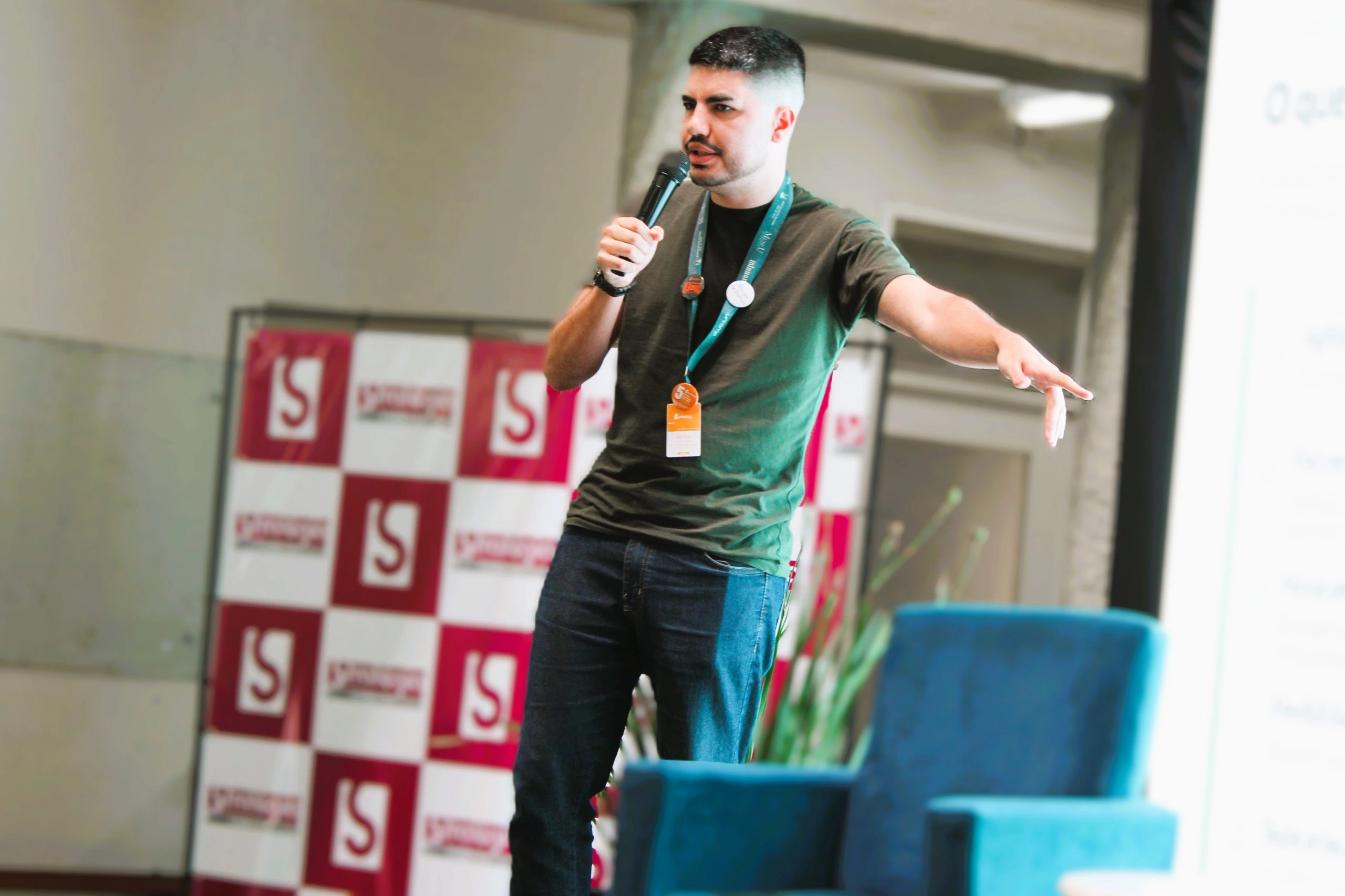
We also brought virtual reality into the experience. I proposed purchasing two Meta Quest 3S headsets, with an eye not only toward the event but also toward using the devices in future university projects and experiences. I configured the headsets and prepared a demonstration of the architectural models at full scale. Wearing the headsets, visitors could see buildings at life size, explore their dimensions, and experience a sense of space that a regular image or screen could hardly provide.
Beyond setting up the equipment, I helped students and professors use the headsets and present the experiences to visitors. It was an opportunity to show firsthand that virtual reality isn't just for gaming. It can also support teaching, visualization, architecture, communication, and cultural heritage outreach.
The plan is to keep making use of this setup. We didn't have enough time during event preparations to develop all the interactive experiences I would have liked to create for the university, including original applications and games. But the equipment already gives us a foundation for exploring those possibilities in future projects.
Real Stories That Show Entrepreneurship Is Possible
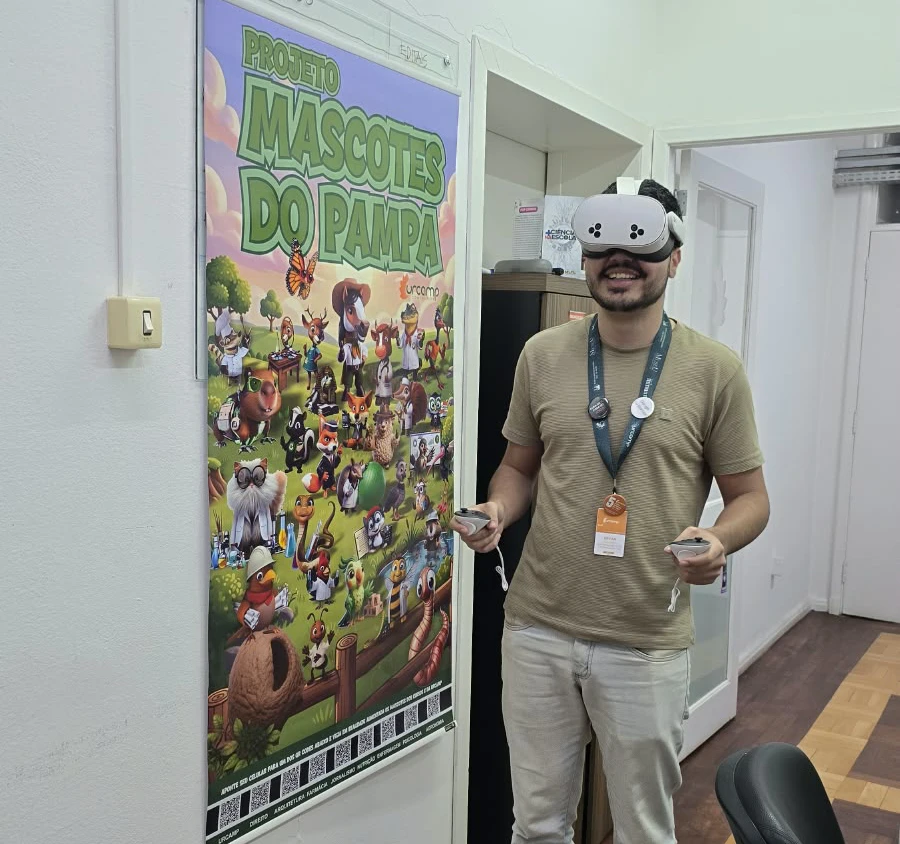
The program also made room for people who are already turning ideas into action. The Success Stories Showcase featured young entrepreneurs and professionals who have built projects, businesses, and careers outside more traditional paths.
The goal was to introduce students to a range of relatable examples. For those still in school, meeting people who have started building something of their own makes entrepreneurship feel less abstract. A startup stops being just a word in a presentation and becomes a real possibility, with challenges, decisions, and hard work behind it.
On November 18, the program also featured the panel "Entrepreneurship and Innovation That Transform Regions", with Mariela Portz, Deputy Secretary of Rio Grande do Sul's Secretariat for Innovation, Science, and Technology. There was also a presentation on artificial intelligence and its applications, led by Mario Carvalho of Embrapa.
These conversations connected the local experience with broader discussions about technology, regional development, and emerging opportunities. The message for students was simple: there are many ways to build a career, and starting a business or developing an innovative solution can be part of that journey.
A visual identity to bring the project together
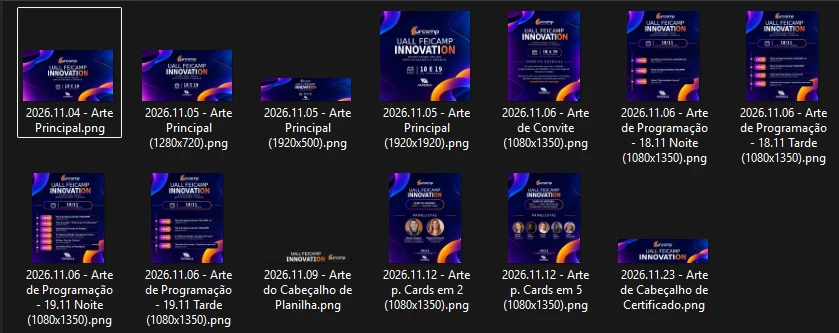
Alongside organizing the activities, I also worked on the visual identity for UALL FEICAMP Innovation and designed many of the graphic assets used to promote the event and support its program. The goal was to give a diverse lineup of activities a consistent look, with a recognizable visual language across materials such as the main event artwork, invitations, and graphics created for individual activities.
The work brought together design, composition, and color theory, but it also had a practical purpose: the visual identity needed to work across different formats and help people recognize that all these activities were part of the same initiative.
The event ends. The work of building connections continues.
One of the goals of UALL FEICAMP Innovation was to bring together the different groups that can contribute to regional development: educational institutions, businesses, government, entrepreneurs, students, and organizations involved in innovation. Invitations and outreach were part of that strategy, because an ecosystem doesn't grow stronger when institutions work in isolation.
Building those connections takes ongoing effort. Meetings need to lead to participation, conversations need to turn into projects, and interest needs to grow into collaboration. Events like this help create a shared space for those connections to happen and make innovation more than just an institutional talking point.
It also became clear that this work can't depend on a single event. Building an entrepreneurial culture takes time. Students need new opportunities to experiment, entrepreneurs need spaces to share their experiences, and institutions need to keep channels for collaboration open after the program ends.
That's why the plan is to continue these activities, hold new editions of the Idea Lab and the Pitch Showdown, and put the immersive technology setup to use in other initiatives. The event was a starting point, not an ending.
Innovation Thrives Beyond Major Cities
There's a reason this work matters to me. When people talk about technology, startups, and innovation, the conversation often seems to happen somewhere else, concentrated in state capitals and major urban centers. But the ability to innovate doesn't belong to any one city or industry.
Our region has talent, problems that need solving, knowledge produced by local educational institutions, and people willing to build businesses. What we need is more opportunities to connect those elements and show young people, especially, that they can be part of making it happen.
UALL FEICAMP Innovation was a concrete attempt to do just that: bring people together, introduce new possibilities, and put innovation in front of the community instead of waiting for people to discover it on their own.
It took months of preparation to bring two days of activities to life. Now the challenge is to make sure the ideas, connections, and experiences that came out of the event continue to produce results long after it has ended.