
On May 8, 2025, I released Cartovyn, a platform that turns the static maps of tabletop role-playing games into interactive, immersive worlds. It was the first of its kind, and I built every part of it myself: the platform, the map engine inside it and all of the code, written by hand with no AI generating any of it. In its short life, more than 1,500 people signed up.
I did not build it for money or for a market. I built it because I wanted to, and because it was the hardest thing I could think of. This is the story of Cartovyn, the engine that powers it and the smaller tool I made afterward.

| Apps released | 2 |
| Users reached | 1,500+ |
| Custom software | Vixia Engine, built from scratch |
| Flagship platform | Cartovyn, released May 8, 2025 |
| Live platform | Visit Cartovyn |
A map that stood still
Anyone who has played a tabletop role-playing game knows the map. It is usually a single image, shown on a screen or printed on paper, and everything that gives it meaning lives somewhere else. The notes sit in the game master's folder, the travel plans sit in someone's head and the mood of a place depends on how well it is described out loud.
I wanted the map itself to carry all of that. I imagined a map you could pan across, with layers you could switch on and off, tooltips on the places that matter, weather moving across it and a day and night cycle that changed how it felt. Nothing I knew of did this, so I decided to make it.
Why it looked impossible
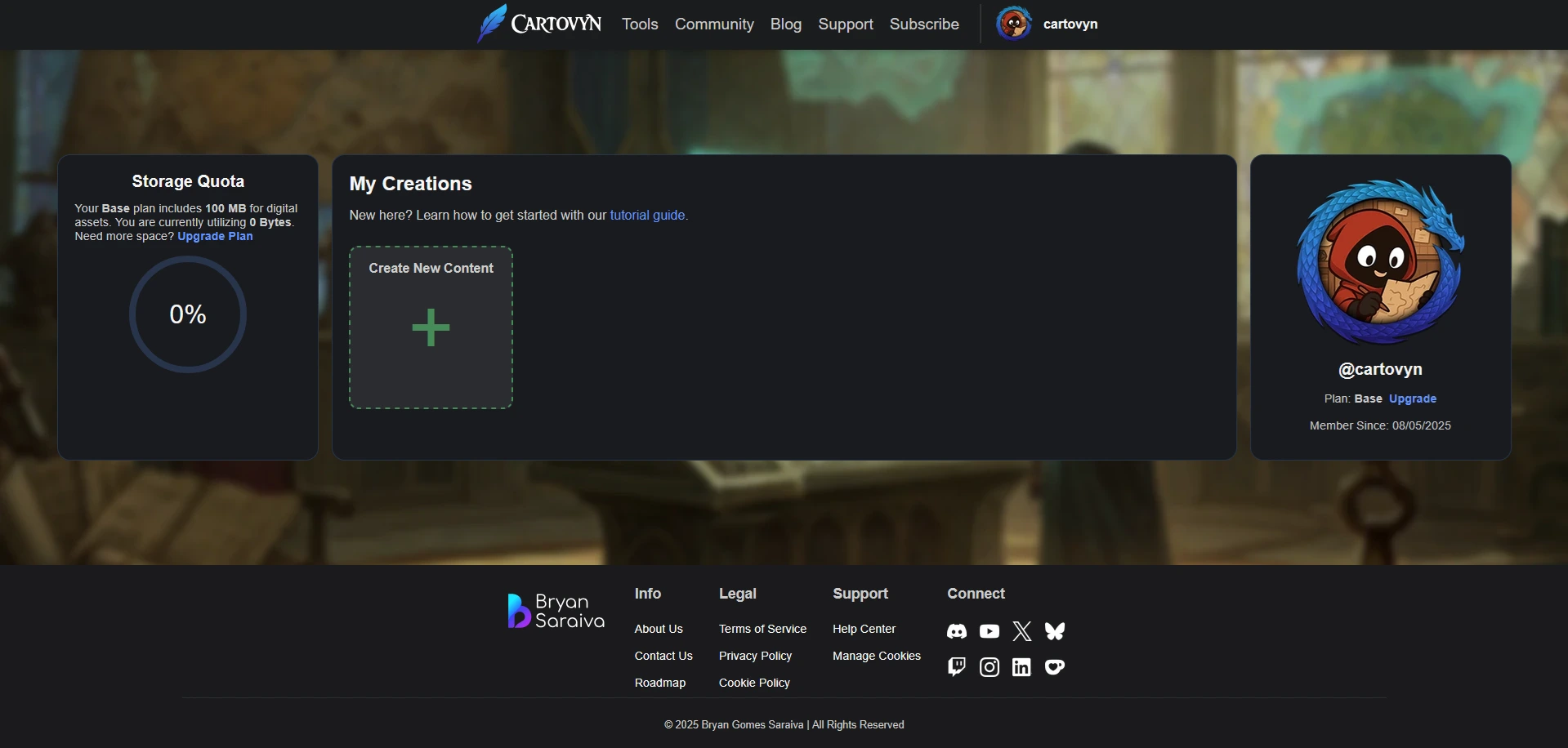
A map viewer is a small idea. A platform people can sign up for, pay for and trust with their work is a very large one. It needs accounts, a store, a backend, cloud infrastructure and a long list of integrations with outside services, and all of it has to be secure. Companies assign teams to that.
I had no team, and this time there was another choice to make. AI coding tools were everywhere, and I wrote every line by hand anyway. Years earlier, shipping my Android apps alone had been the only option. Here it was a decision, and it meant that I understood every piece of the platform because I had made every piece.
Building the engine first
Before there was a platform, there had to be a way to draw the maps the way I imagined them. So I built my own web engine and called it the Vixia Engine.
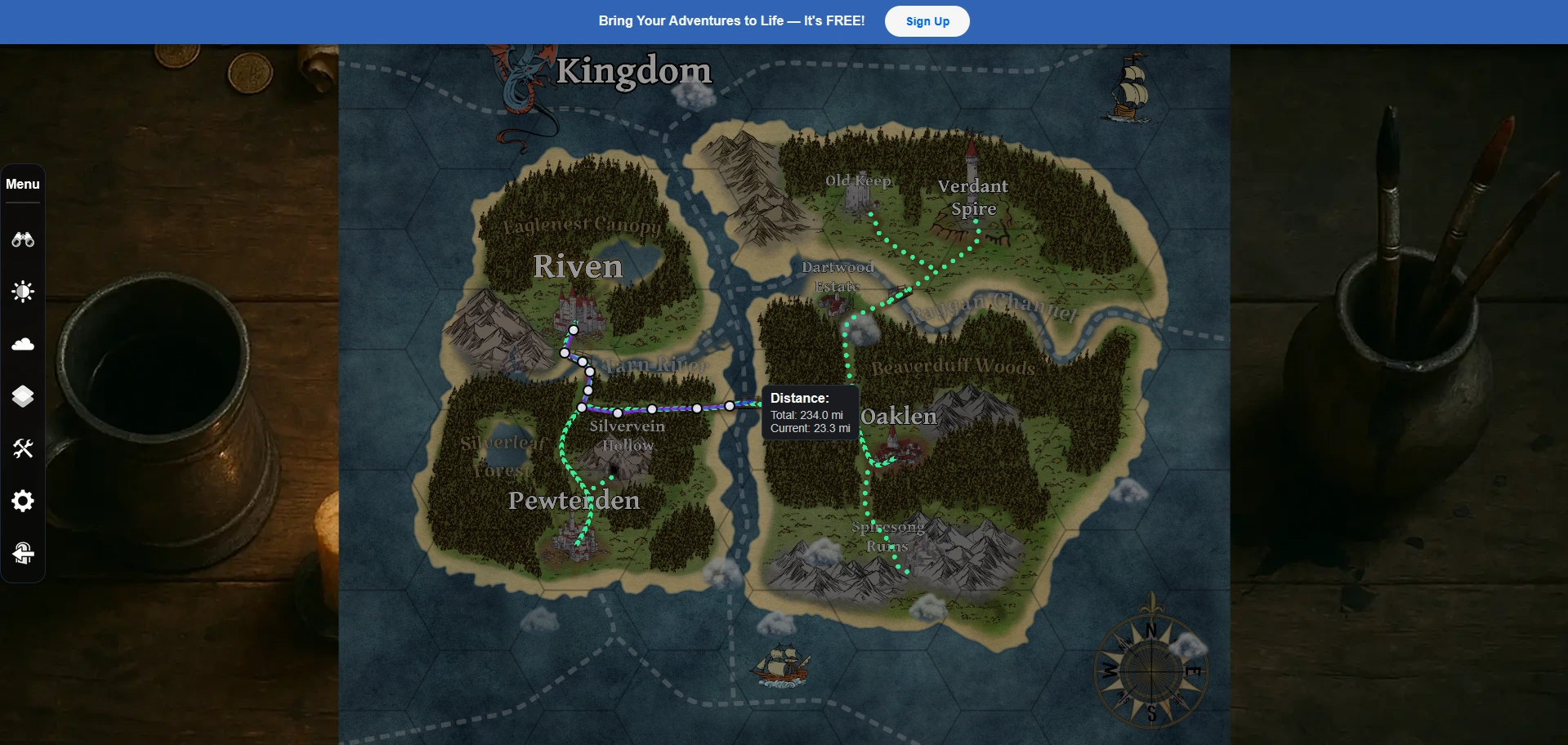
Vixia takes a static map and makes it behave like a place. Users pan around it and read tooltips on points of interest. They switch between overlays that highlight roads, sea routes, settlements and other parts of the world. Sound, weather and a day and night cycle give each map an atmosphere, and the whole thing runs in a browser with no install.
The platform around the map
Once the engine worked, the rest of the system had to be built around it. I wrote the authentication, the shopping mechanics, the roadmap and every other piece a real product needs. For the people running the games, there were layers of interface to organize a map, notes visible only to the game master, and a tool for planning travel routes across the world.
Behind the screens, the work was less visible and just as demanding. I connected the platform to a large number of APIs and external services, built the backend, set up the cloud infrastructure and took responsibility for how user data was handled and protected. A small mistake in any of those areas would have been a mistake in someone else's account.
Release day
Cartovyn went live on May 8, 2025. A platform built entirely by one person went on to pass 1,500 users. This is the platform I left game modding to build.
Why I stepped away
I stopped working on Cartovyn soon after, and the reasons were ordinary. I had other projects in mind. I had to finish my bachelor's degree in Information Systems. Then I became the Manager of Innovation and Technology for the Fronteira Oeste and Campanha regions, a role that took nearly all of my free time.
I kept the platform hosted, though. As of November 2026, Cartovyn is still online and fully functional, and I plan to keep it that way for months to come.
A smaller tool for a real problem
My next web project was nearly the opposite of Cartovyn. While helping the Universidade da Região da Campanha, URCAMP, plan its events, I saw how the work was being done: by hand, in Google Sheets files. It was slow, and anyone who had not worked on a file every day had trouble making sense of it.
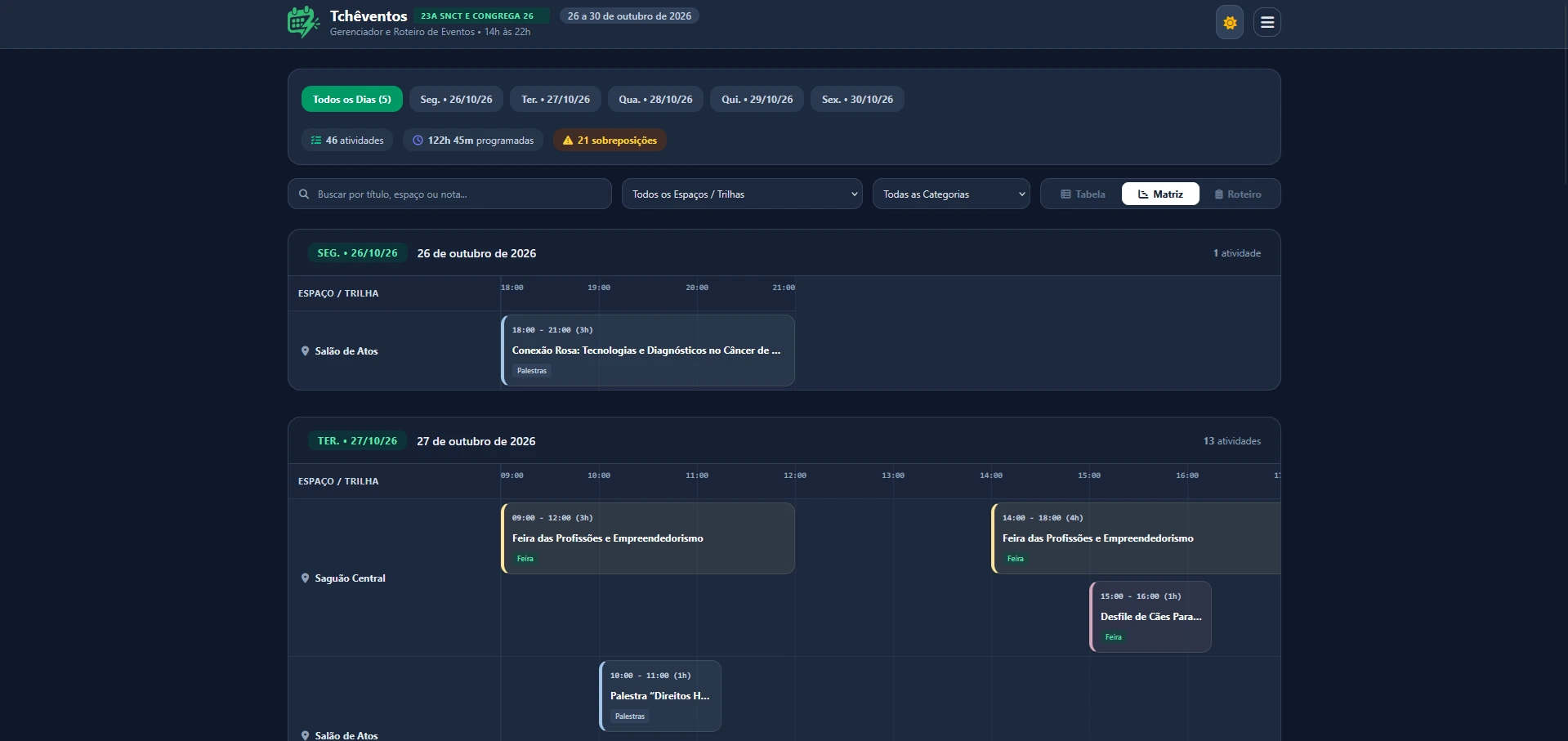
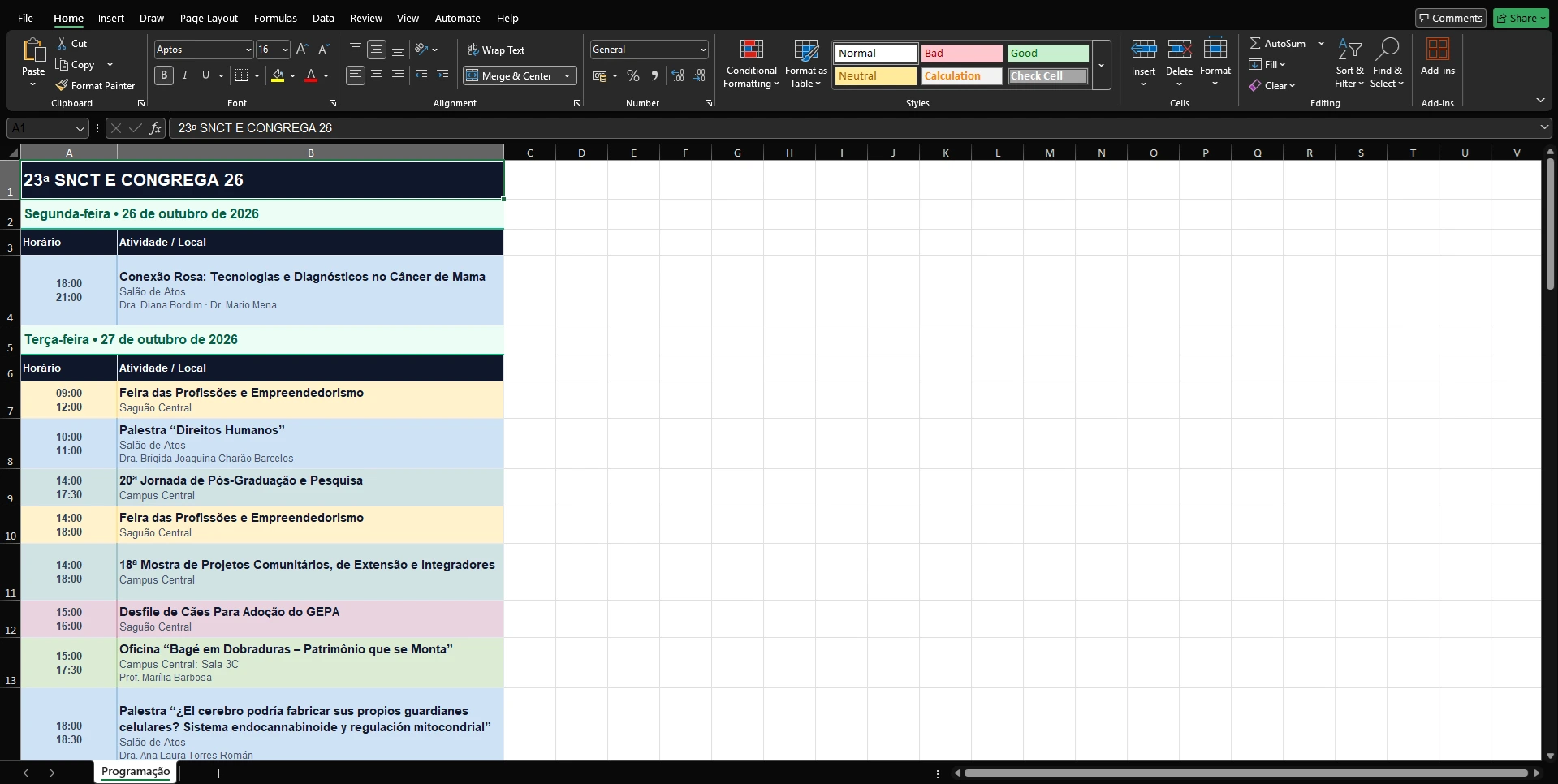
I built Tchêventos to replace those spreadsheets. The name joins "tchê", a friendly expression from southern Brazil, with "eventos", the Portuguese word for events. It lets a team organize any kind of event with activities, speakers and color-coded tasks. The same program can be viewed as a roster, a matrix or a horizontal timeline, and it exports to Excel as either a horizontal timeline or a vertical program, depending on what the audience needs.
It is lightweight and easy to use, and I released it as open source under the GPL-3.0 license. At URCAMP, we use it extensively to build our programs.
Featured works
Cartovyn
Released May 8, 2025 | 1,500+ users
An interactive map platform for tabletop role-playing games, built alone from the first line to the last. It turns a static map into a world with layers, atmosphere, game master notes and travel planning, and it includes everything a real product needs, from accounts to a shop.
Vixia Engine
Custom web engine | Built from scratch

The engine that renders every map on Cartovyn. It handles panning, overlays, tooltips, sound, weather and the day and night cycle, and it was written for this one purpose rather than adapted from an existing tool.
Tchêventos
Open source under GPL-3.0 | Used at URCAMP

A lightweight event planner built to replace slow, hard-to-read spreadsheets. It organizes activities and speakers, shows the program in several views and exports it to Excel, and a university uses it extensively.
What comes next
These are the web projects I have finished so far, and I am working on more that I will share soon.
What these projects produced
Cartovyn taught me more than any project before it. To ship it, I had to learn cybersecurity, the careful handling of sensitive data, how to connect a product to many outside services, backend development and cloud infrastructure. Each of those could be a career on its own, and I had to learn them together, in the same codebase, with real users watching.
Tchêventos taught a different lesson. After a platform that took so much to build, it showed me how much good a small, focused tool can do when it solves a problem people actually have.
I built Cartovyn for fun, because I wanted to. It was an insane project to take on, and I learned a great deal from it.